ATEX Certified Explosion-Proof Solar Systems: Why AUTEX is Trusted for Oil and Gas Operations
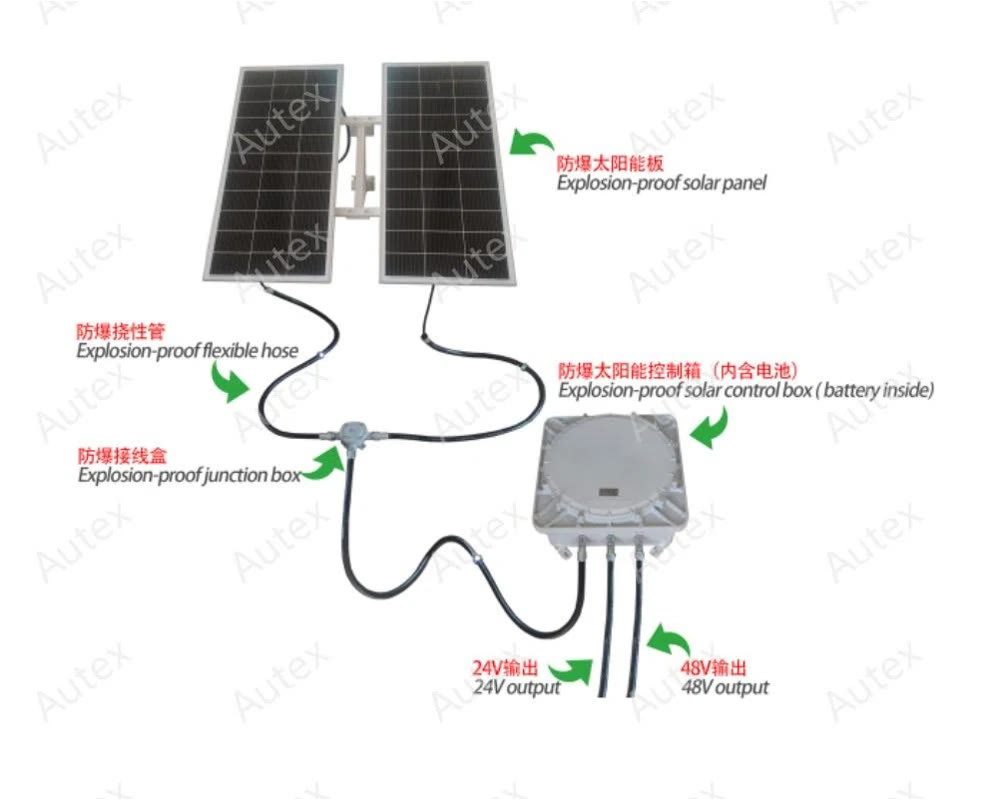
YANGZHOU, JIANGSU, CHINA, October 29, 2026 /EINPresswire.com/ -- Operating electrical infrastructure within upstream oil extraction fields, midstream transmission pipelines, chemical processing plants, and offshore drilling platforms requires uncompromising adherence to explosion-proof safety protocols. In hazardous industrial environments where flammable hydrocarbon gases, volatile vapors, or combustible dust clouds are continuously or intermittently present, standard commercial electrical equipment presents catastrophic ignition hazards. Deploying remote off-grid monitoring and automation assets across pipeline networks devoid of utility grid infrastructure demands autonomous power generation that contains zero thermal or electrical ignition potential. Established in 2006, AUTEX engineers heavy-industrial off-grid energy infrastructure, delivering certified ATEX certified explosion-proof solar power systems that satisfy European ATEX, international IECEx, and North American UL hazardous-location standards. The AUTEX explosion-proof solar architecture establishes a closed-loop safety envelope across four core engineering pillars:
- Ignition Source Mitigation: Suppresses electrical arcing, mechanical friction sparking, and localized high-temperature hotspots across all photovoltaic panels, terminal junctions, and power conversion electronics.
- Intrinsic Safety and Energy Limitation: Restricts internal circuit voltages, operational currents, and thermal dissipation levels below the minimum ignition energy (MIE) thresholds of volatile atmospheric gases.
- Heavy-Duty Flameproof Containment Enclosures: Protects central controllers and battery management electronics within cast aluminum and stainless steel housings engineered to contain internal pressure spikes and arrest flame propagation.
- Dedicated Hazardous-Area Photovoltaics and Sealed Storage Banks: Integrates certified explosion-proof solar modules and spark-suppressed, chemically sealed battery storage arrays designed for continuous off-grid reliability.
ATEX, IECEx, and UL Certification Standards and Hazardous Area Classifications
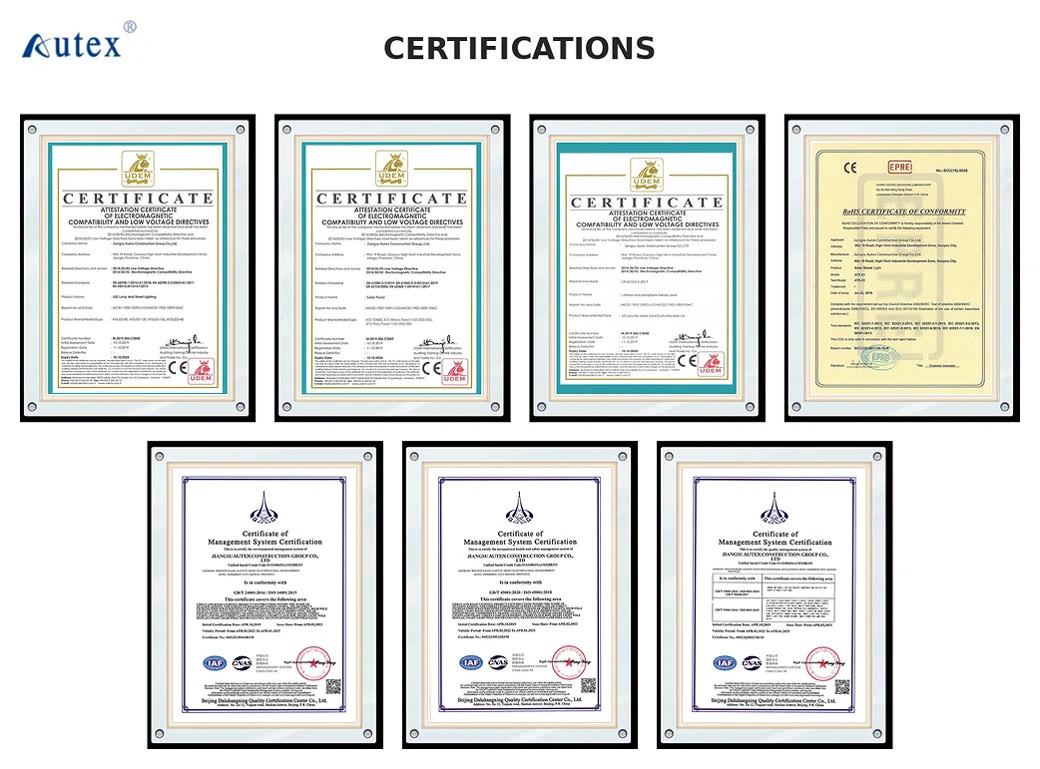
Deploying electrical apparatus in explosive atmospheres is governed by rigorous international safety directives, primarily European ATEX Directive 2014/34/EU, the international IECEx system, and North American NEC 500/505 (UL 121201 / UL 60079) standards. Hazardous industrial areas are classified based on the frequency and duration of an explosive atmosphere: Zone 0 (continuous hazard), Zone 1 (flammable gas likely during normal operations), and Zone 2 (flammable gas present only during abnormal conditions). AUTEX explosion-proof solar systems are tested and certified to comply with Gas Groups IIA, IIB, and IIC (spanning propane, ethylene, and hydrogen) and Temperature Classes from T1 up to T6 (limiting maximum external surface temperatures below 85 degrees Celsius). Conforming to IEC 60079 series standards establishes verified operational safety for off-grid power generation across classified Class I, Division 1 and Division 2 industrial zones.
Electrical Arc Suppression and Spark-Suppressed Enclosure Connection Architecture
Electrical arcing during circuit switching, loose terminal connections, or mechanical vibration poses a primary ignition source in volatile petroleum atmospheres. AUTEX explosion-proof solar systems incorporate increased safety (Ex e) junction boxes and hermetically sealed electrical conduits. Terminals employ spring-loaded, anti-vibration clamping mechanisms that maintain constant surface contact pressure despite continuous acoustic vibrations or mechanical shocks common to compressor stations and drilling rigs. Electrical cabling is routed through heavy-duty Ex d flameproof barrier cable glands fitted with elastomeric sealing rings and metallic armor clamps. All internal bypass diodes, circuit isolation contactors, and disconnect switches are sealed within flameproof housings, ensuring that regular load switching or fault current events produce zero external arcs or electrostatic discharges capable of igniting ambient gas mixtures.
Intrinsic Safety Engineering and Thermal Energy Limitation Principles
Intrinsic safety (Ex i) principles require that electrical circuits operate with strictly bounded energy levels such that no spark or thermal effect can cause ignition of a specific hazardous atmosphere. The AUTEX explosion-proof charge controller integrates galvanically isolated intrinsic safety barriers, high-speed Zener diode voltage clamps, and precision current-limiting resistors. In the event of an electrical short circuit or component breakdown within field telemetry sensors, the barrier circuitry clamps voltage and shunts excess current within microseconds. Additionally, the electronic layout distributes thermal dissipation evenly across heavy aluminum heat sinks, maintaining surface component temperatures well below the auto-ignition temperature of heavy hydrocarbons. This dual electrical-thermal limitation allows continuous sensor power delivery without introducing energy levels capable of breaching atmospheric ignition thresholds.
Heavy-Duty Flameproof Enclosures and Explosion-Containment Manufacturing
In the unlikely event that flammable gases penetrate an electrical housing and ignite internally, the physical enclosure must contain the internal explosion without permitting flame or hot gases to propagate into the surrounding atmosphere. AUTEX flameproof (Ex d) enclosures are cast from high-tensile, low-copper aluminum alloy or machined from heavy-gauge SUS316 stainless steel. Enclosure walls feature thick structural cross-sections engineered to withstand internal explosion pressures exceeding 1.5 times the maximum reference explosion pressure. Mating surfaces between enclosure bodies and access covers are precision-machined with extended flame paths (flanged and threaded joints) with tight mechanical gap tolerances below 0.1 mm. When internal gases ignite, the expanding exhaust gases are cooled as they travel through the narrow flame path, exiting at temperatures well below the ignition point of external atmospheric gases.
Specialized Explosion-Proof Photovoltaic Modules and Sealed Storage Banks
Solar panels and battery storage banks deployed in hazardous environments must withstand harsh chemicals, corrosive offshore atmospheres, and severe physical impacts without compromising structural sealing. AUTEX explosion-proof solar panels feature high-transmittance, tempered safety glass with high impact resistance, backed by a fully encapsulated EVA layer and an IP66 Ex e certified junction box filled with flame-retardant potting resin. The accompanying energy storage system incorporates specialized explosion-proof lithium iron phosphate (LiFePO4) or sealed gel batteries housed in a heavy Ex d or Ex e protective battery cabinet. The battery enclosure features bidirectional flame arrestor vents and catalytic recombination caps that mitigate hydrogen gas accumulation, maintaining a stable, spark-suppressed chemical environment across ambient operating temperatures from -40 degrees Celsius to +65 degrees Celsius.
Continuous Remote Power for Zone 1 and Zone 2 SCADA, RTU, and Pipeline Monitoring
AUTEX explosion-proof solar systems deliver dependable off-grid electricity for critical remote infrastructure across Zone 1 and Zone 2 hazardous installations. In cross-country oil and gas pipelines, the systems provide steady direct-current power to cathodic protection stations, mitigating electrochemical corrosion along buried steel pipes. In uncrewed wellhead sites and refinery storage tank farms, the solar assemblies continuously energize supervisory control and data acquisition (SCADA) systems, remote terminal units (RTUs), ultrasonic flow meters, optical hydrocarbon gas detectors, and explosion-proof PTZ surveillance cameras. By providing independent, certified power generation directly at the monitoring point, facilities avoid expensive long-distance armored cable trenching across classified zones while maintaining continuous real-time telemetry and process safety.
To review ATEX and IECEx compliance documentation, technical electrical schematics, and custom hazardous-area solar system configurations, please consult our industrial engineering division through our international portal.
Official Portal: https://www.autexsolar.com/
Yangzhou Autex Solar Technology Co., Ltd.
AUTEX
Visit us on social media:
Instagram
Facebook
YouTube
Legal Disclaimer:
EIN Presswire provides this news content "as is" without warranty of any kind. We do not accept any responsibility or liability for the accuracy, content, images, videos, licenses, completeness, legality, or reliability of the information contained in this article. If you have any complaints or copyright issues related to this article, kindly contact the author above.