

Substation vs Distribution Transformers: Grid Voltage Hierarchy Distinctions by XIAOWEI
Voltage Class Spectrum and Megavolt-Ampere Capacity Ratings
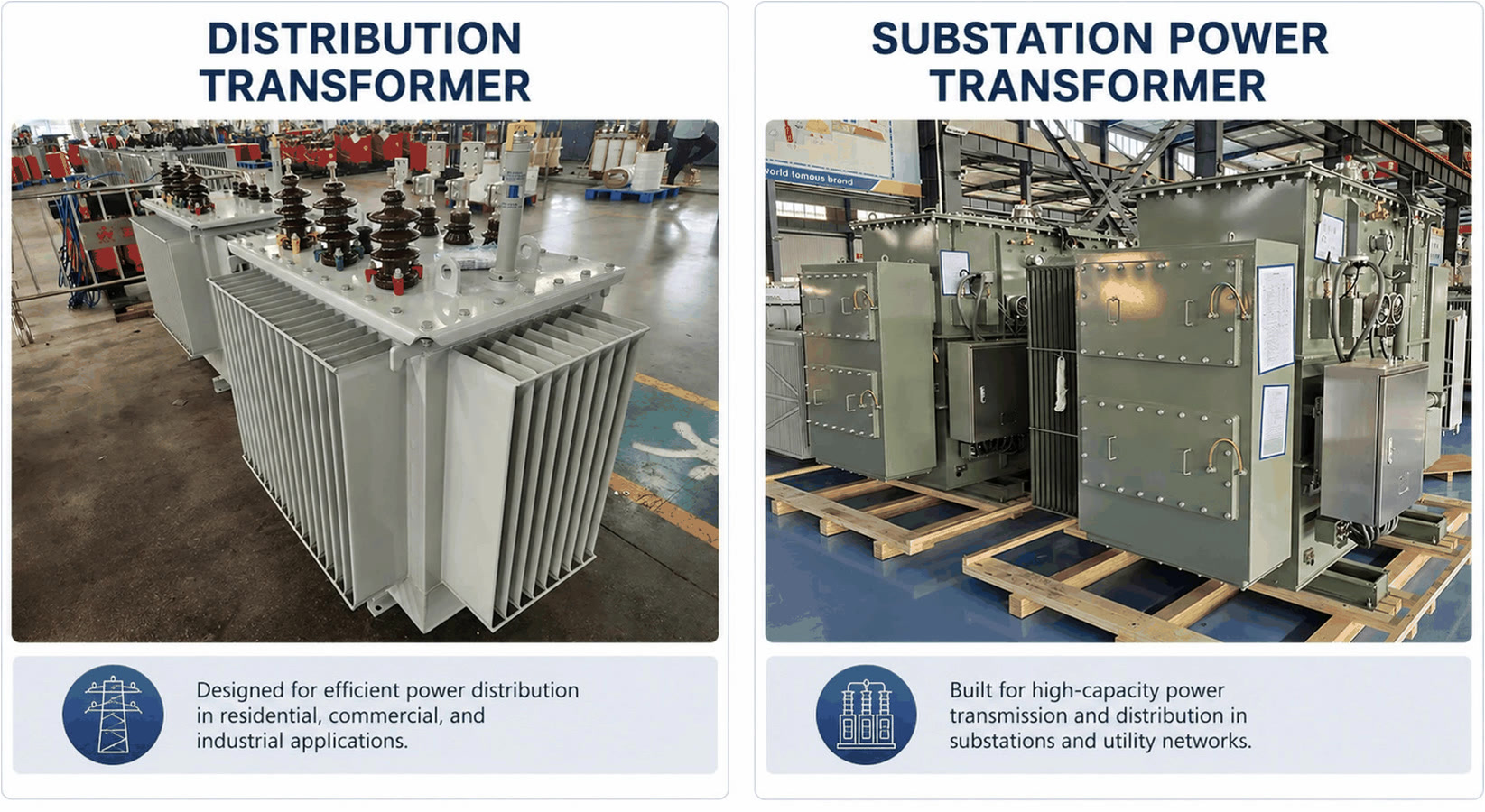
Power transmission systems transmit bulk electrical energy at high voltages to minimize conductor resistance losses over long distances, whereas distribution networks step down voltage levels for safe utilization by commercial machinery and building loads. Substation transformers operate at primary bulk power interfaces, stepping down transmission voltages (such as 110kV or 220kV) to intermediate distribution voltages (such as 35kV, 22.9kV, 13.8kV, or 11kV). These large-scale units handle power capacities spanning from 6.3MVA up to hundreds of megavolt-amperes (MVA). XIAOWEI manufactures substation power transformers across 110kV classes, exemplified by 6300kVA, 8000kVA, and 10000kVA models constructed with 100% copper windings, serving as the central power backbone for regional utility substations and large-scale industrial complexes.
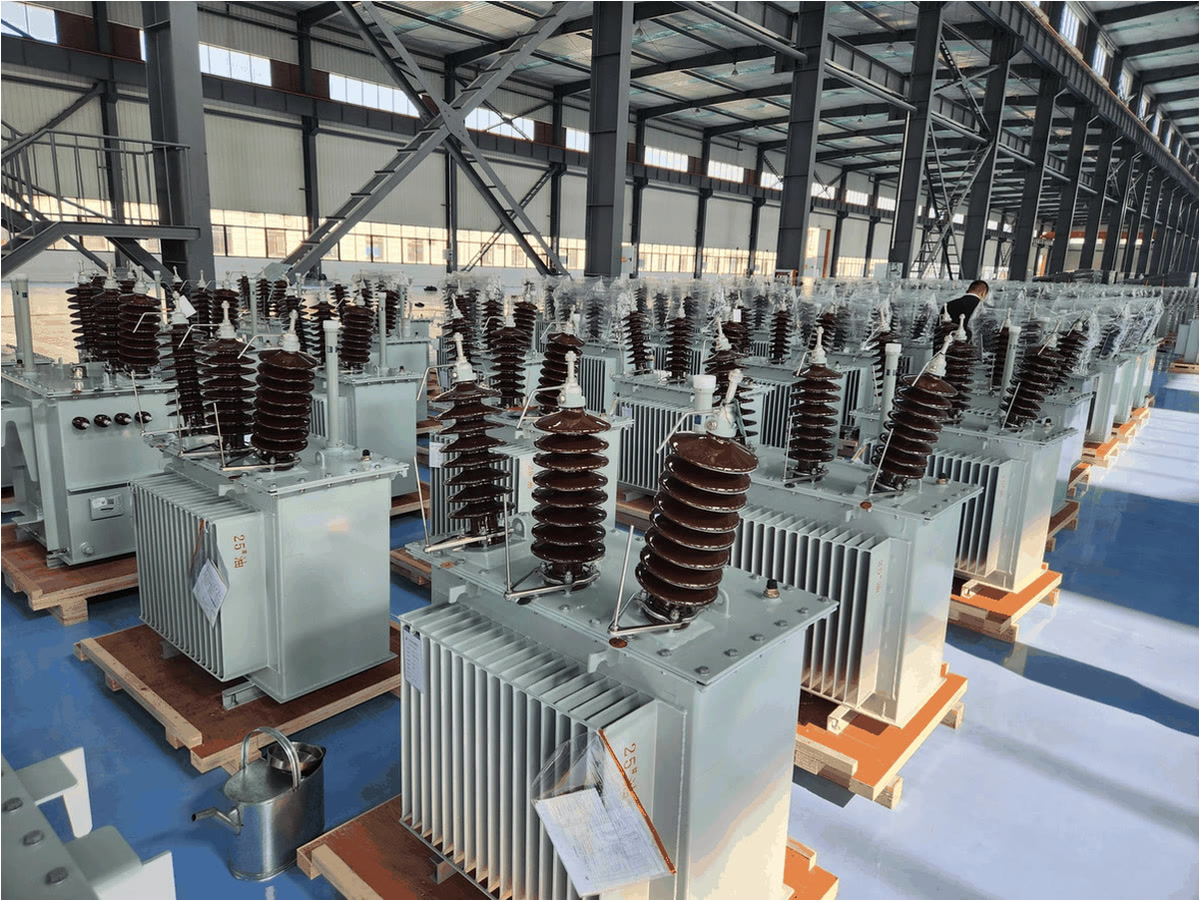
Conversely, distribution transformers function at the final step of the utility delivery chain. Positioned at residential neighborhoods, commercial centers, or industrial manufacturing plants, distribution units receive medium-voltage electricity and step it down to low utilization voltages (such as 480V, 400V, 240V, or 208V). Operating capacities range from small single-phase units (such as 10kVA to 50kVA) to three-phase units reaching 500kVA up to 5000kVA, managing primary input voltages up to 35kV. Distribution units focus on compact spatial footprints, low excitation losses, and direct physical proximity to consumer connections.
Voltage Regulation Architecture: De-Energized vs On-Load Tap Changing
Maintaining stable busbar voltage under dynamic loading represents a core technical distinction between distribution and substation transformers. Distribution transformers operate under localized, relatively stable circuit profiles. Consequently, they utilize manual de-energized tap changers (DETC), typically offering adjustment ranges of +/-2x2.5% on the high-voltage winding. Adjusting these tap settings requires temporarily de-energizing the transformer, making DETC suitable for seasonal load shifts rather than real-time grid compensation.
Main substation transformers must continuously regulate system voltage fluctuations caused by shifting industrial demands and intermittent renewable generation without interrupting downstream customer power. To accomplish this, substation transformers integrate On-Load Tap Changers (OLTC). These automated mechanisms adjust winding turns ratios under full electrical load, coordinating with automatic voltage regulators (AVR) to maintain grid stability across fluctuating transmission conditions. High-speed vacuum diverter switches inside the OLTC mechanism extinguish electrical arcs during transition steps, preventing oil degradation within the main transformer tank and supporting smooth voltage regulation.
Cooling Infrastructure and Thermal Dissipation Mechanics
Thermal dissipation requirements scale non-linearly with power rating and dielectric liquid volume. Distribution transformers typically rely on natural convective cooling mechanisms, categorized as oil-immersed natural air circulation (ONAN). Compact corrugated tank walls or simple panel radiators provide sufficient heat dissipation surface area to maintain core and winding temperatures within rated limits under standard operating conditions. Natural thermosiphon circulation moves dielectric fluid upward through heated coil ducts and downward through external radiator cooling fins.
Substation power transformers generate substantial thermal energy during bulk power transformation. Managing these heat loads requires multi-stage forced cooling systems, operating under ONAF (oil natural, air forced) or OFAF (oil forced, air forced) regimes. Substation units incorporate automated fan banks that stage into service as oil temperatures rise, along with auxiliary oil pumps that circulate dielectric fluid through heavy-duty radiator assemblies, preventing internal thermal accumulation during peak transmission hours. Sound-attenuated low-noise fan blades comply with municipal environmental noise boundaries surrounding urban utility substations. Substation transformers also incorporate dedicated oil conservator tanks equipped with dehydrating silica gel breathers or sealed rubber diaphragm bladders, preventing atmospheric oxygen and moisture ingress from degrading transformer oil over multi-decade operating spans.
Protection Relaying, Condition Monitoring, and Network Topology
Because substation transformers serve as central hubs feeding entire municipal districts or major manufacturing campuses, their protection schemes reflect high operational criticality. Substation transformers incorporate extensive monitoring instrumentation, including multi-float Buchholz gas relays to detect internal arcing, sudden pressure relief relays, winding and oil temperature indicators (OTI/WTI), optical fiber direct winding temperature probes, and online dissolved gas analysis (DGA) sensors connected to central SCADA networks. These instrumentation arrays support predictive condition-based maintenance and remote telemetry.
Distribution transformers operate as decentralized terminal assets. Protection is typically provided by external pole-mounted cutouts, current-limiting fuses, or compact bayonet fuses within pad-mounted compartments. This modular arrangement isolates localized faults without disrupting the broader distribution network, simplifying field replacements and lowering balance-of-system deployment costs.
Direct Factory Manufacturing and Full-Spectrum Technical Support
Procuring distribution and substation power transformers directly from an established factory manufacturer ensures consistent engineering standards, verified material traceability, and valid type test documentation across the entire utility voltage spectrum. Direct manufacturer engagement enables EPC contractors and utility engineers to review detailed CAD drawings, coordinate protection schemes, and confirm factory acceptance testing protocols.
Supported by 20 years of transformer manufacturing experience, XIAOWEI maintains advanced fabrication facilities and accredited testing laboratories, maintaining an established track record of zero fault rate for more than 10 years across global distribution projects. Core laminations utilizing cold-rolled grain-oriented steel with step-lap joints minimize excitation dissipation across both distribution and substation ratings. To examine technical specifications, review dimensioned drawings, access KEMA certified type test reports, or receive volume export quotations for distribution and substation units, visit the official company website: https://www.xiaoweipower.com. Specialized application engineers remain available to assist project teams with grid interconnection studies, loss evaluation calculations, and custom transformer design.
Jiangsu Xiaowei Electric Co., Ltd.
XIAOWEI
Visit us on social media:
Facebook
Legal Disclaimer:
EIN Presswire provides this news content "as is" without warranty of any kind. We do not accept any responsibility or liability for the accuracy, content, images, videos, licenses, completeness, legality, or reliability of the information contained in this article. If you have any complaints or copyright issues related to this article, kindly contact the author above.
