Commercial Substation Engineering: Dry-Type vs Liquid-Immersed Transformers by XIAOWEI
NANTONG, JIANGSU, CHINA, October 29, 2026 /EINPresswire.com/ -- NANTONG, China: Electrical infrastructure planning within indoor commercial vaults, high-density residential towers, healthcare complexes, and mission-critical facilities requires balancing strict building fire codes against lifecycle power distribution efficiency. Medium-voltage substations situated inside building basements or enclosed mechanical mezzanines face stringent environmental safety mandates and spatial constraints that directly influence transformer selection. Specifying a flame-retardant dry type transformer or an oil-immersed distribution transformer engineered by Jiangsu Xiaowei Electric Co., Ltd. (XIAOWEI) provides electrical design engineers and EPC contractors with equipment tailored to specific building safety standards, environmental regulations, and operating load profiles.
Indoor Electrical Vault Challenges and Safety Mandates
Indoor commercial substations operate within enclosed building boundaries where smoke propagation, fire hazards, and dielectric fluid leaks carry severe consequences for life safety and property integrity. Building safety codes, such as NFPA 70 (National Electrical Code) in the United States and CSA C22.1 in Canada, dictate strict physical separation, fire suppression apparatus, and liquid containment measures based on transformer insulation chemistry. Engineering teams evaluate dielectric systems by examining combustibility ratings, dynamic short-circuit electromagnetic withstand capability, acoustic emission profiles, civil foundation requirements, and long-term maintenance protocols. Selecting appropriate equipment ensures continuous commercial operation while complying with municipal building construction ordinances and electrical safety inspections.
Solid Dielectric Cast Resin Architecture and Fire Safety Compliance
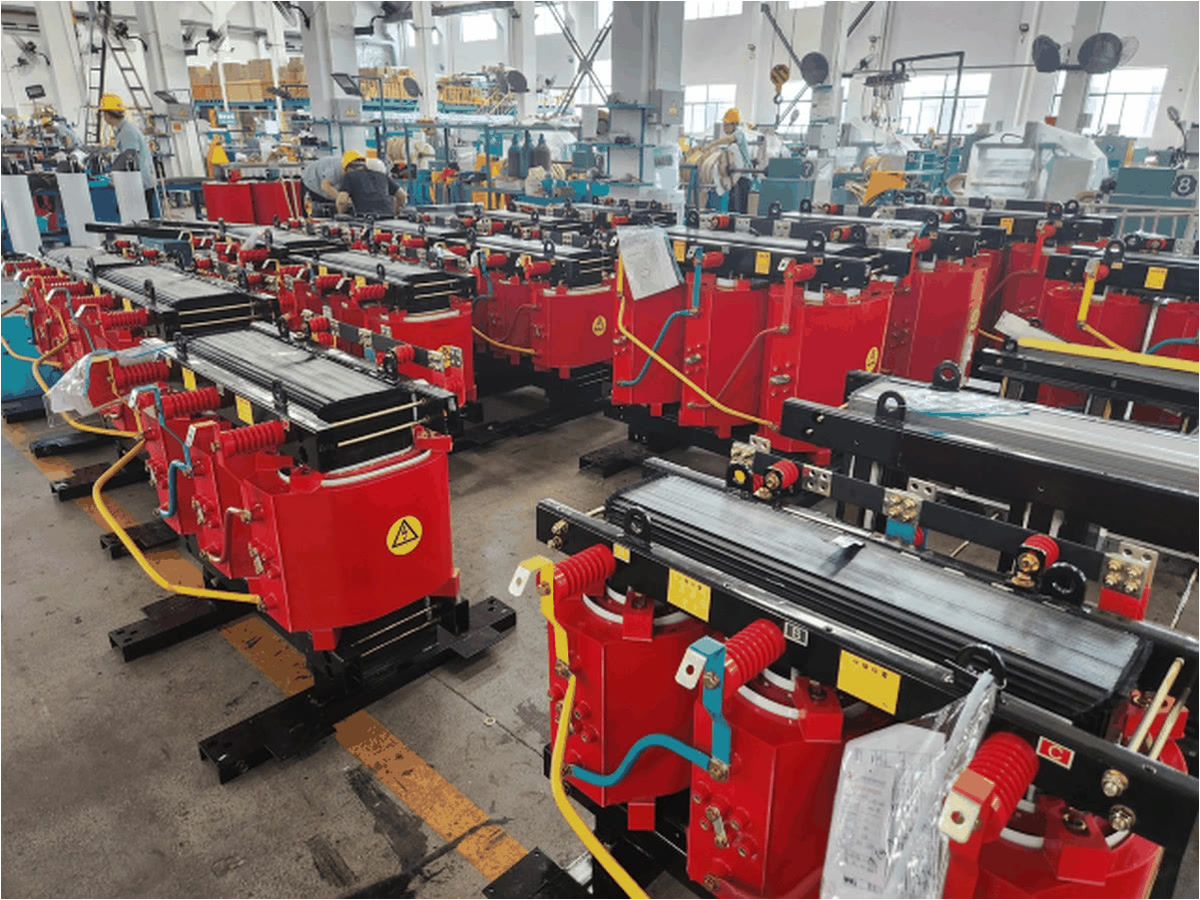
Dry-type transformers employ solid dielectric insulation systems that avoid combustible liquid reservoirs, making them an established solution for high-occupancy commercial structures. XIAOWEI manufactures three-phase cast resin dry-type transformers, exemplified by 10kV 500kVA configurations, utilizing high-temperature Class F or Class H epoxy resin vacuum casting. Under this automated encapsulation process, primary high-voltage coils are cast in pure quartz-reinforced epoxy resin inside vacuum chambers, preventing micro-voids, moisture absorption, and internal partial discharge throughout operating lifespans.
Cast resin transformers satisfy strict F1 fire behavior classifications under international standards such as IEC 60076-11. The encapsulated epoxy material is flame-retardant and self-extinguishing, generating minimal smoke and zero toxic halogen gases during external flame exposure. This solid dielectric structure allows installation directly adjacent to building load centers, distribution switchgear, and elevator corridors without requiring dedicated blast-resistant firewalls or specialized deluge sprinkler arrays. Optional protective enclosures rated from IP20 up to IP55 provide protection against falling dirt, airborne moisture, and incidental splash in commercial basements, while integrated temperature sensors (PT100) embedded in low-voltage windings monitor thermal rise across each phase.
Liquid-Immersed Distribution Characteristics and High-Efficiency Thermal Dissipation
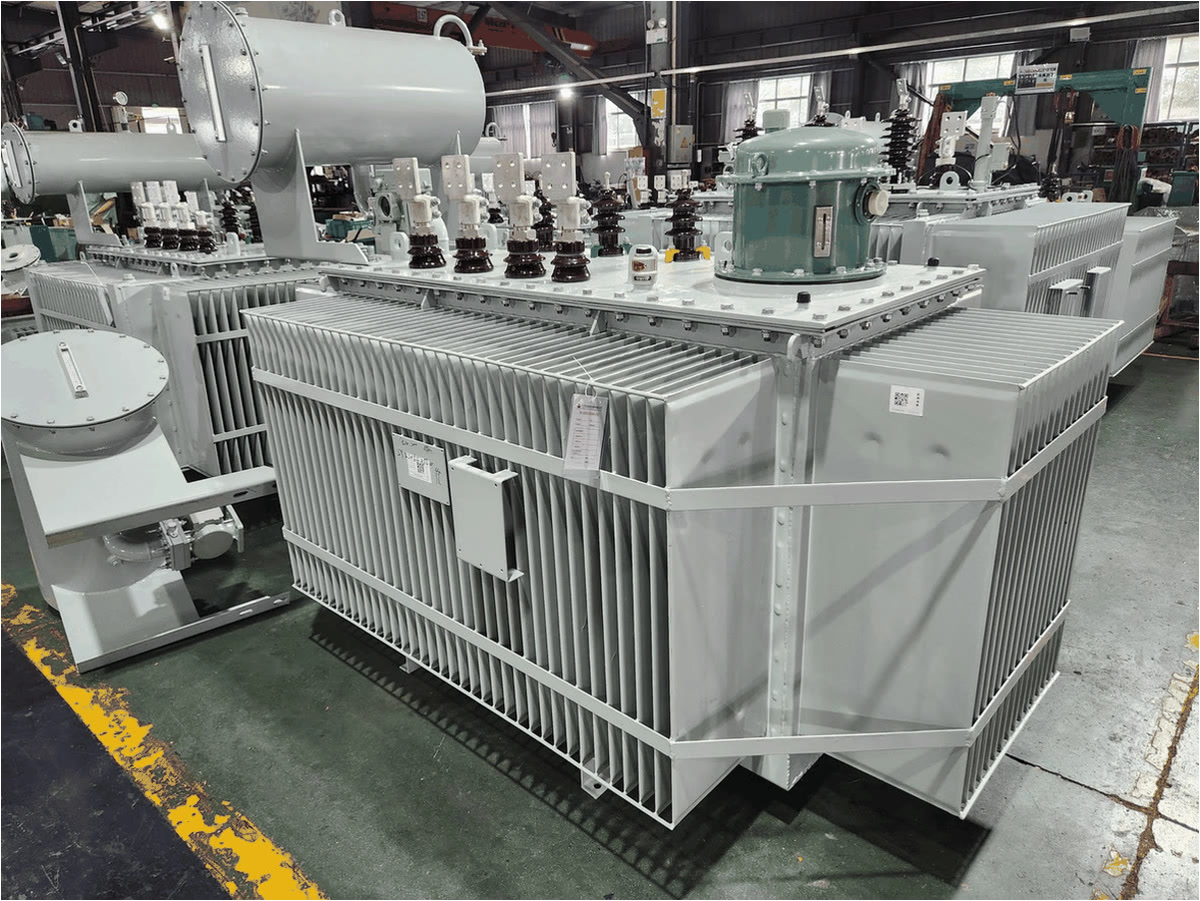
Liquid-immersed distribution transformers provide alternative technical attributes characterized by high dielectric strength and efficient thermal transfer. In applications where transformers are situated in outdoor-adjacent service bays, separate perimeter sub-stations, or dedicated exterior vaults, liquid-immersed units deliver high thermal endurance and balanced short-circuit withstand capabilities. XIAOWEI produces liquid-filled distribution units, including the S11 series (such as 500kVA 22.9kV to 0.4kV step-down models delivered for overseas utility projects), spanning ratings up to 5000kVA at voltage levels up to 35kV.
Liquid-immersed transformers dissipate heat through natural convective oil circulation (ONAN) across corrugated tank walls or external radiator panels. While standard refined mineral oil requires dedicated liquid spill basins and strict building clearance due to its 160 deg C fire point, incorporating biodegradable natural ester FR3 fluid provides a high-fire-point alternative. FR3 fluid possesses a fire point exceeding 300 deg C, classifying it as a Less-Flammable Liquid under NEC Article 450-23. This classification permits closer installation to building perimeters while providing complete environmental biodegradability and moisture absorption characteristics that support solid cellulose paper life under continuous heavy-duty operation.
Civil Construction Footprint and Containment Infrastructure
Total installation capital expenditure depends heavily on the civil infrastructure necessary to house each transformer technology. Liquid-immersed installations, even when utilizing high-fire-point fluids, frequently require concrete spill containment bunds, oil-water drainage separators, and reinforced blast containment walls to satisfy municipal environmental protection codes. These civil provisions increase architectural floor space allocations and initial structural construction expense within urban basement vaults.
Cast resin dry-type transformers require zero liquid containment infrastructure. The absence of free dielectric fluids removes the need for concrete catch basins, oil sensors, and specialized drainage plumbing. The compact structural envelope allows direct placement on standard building concrete floors with reduced clearance distances, decreasing civil engineering costs and freeing usable square footage in high-value commercial properties.
Overload Dynamics, Acoustic Performance, and Lifecycle Maintenance
Operational dynamics differ across both technologies over extended operating horizons. Dry-type transformers can integrate cross-flow cooling fan assemblies (AF mode), providing a temporary continuous capacity increase of 30% to 50% above nominal self-cooled ratings to manage emergency peak building loads without structural damage. Cast resin units also require minimal routine maintenance, requiring only periodic vacuum cleaning of ventilation ducts and terminal torque verification.
Liquid-immersed transformers offer enhanced acoustic dampening, generating lower magnetic hum levels suitable for noise-sensitive institutional installations. In addition, liquid-immersed transformers maintain sealed hermetic fluid reservoirs that protect internal core-and-coil assemblies from ambient atmospheric oxidation, supporting a recorded track record of zero fault rate for more than 10 years across global distribution installations. Periodic maintenance centers on fluid dielectric breakdown sampling and moisture analysis according to standard ASTM and IEC guidelines.
Factory-Direct Engineering Coordination and Technical Procurement Portal
Procuring commercial substation transformers directly from an established manufacturer holding dual-line production capabilities allows consulting engineers to select the appropriate technology based on objective application analysis. Sourcing directly from the factory ensures verified material compliance, transparent engineering submittals, and authentic UL, CSA, CE, and KEMA certified type test documentation.
Drawing on 20 years of manufacturing experience, XIAOWEI produces a broad range of dry-type and liquid-immersed transformer solutions adhering to international safety and efficiency standards. To evaluate detailed technical specifications, access dimensioned 3D CAD drawings, review third-party laboratory reports, or obtain formal project quotations, visit the official company website: https://www.xiaoweipower.com. Specialized technical engineering personnel remain available to assist with substation vault layouts, protection coordination, and custom enclosure requirements.
Jiangsu Xiaowei Electric Co., Ltd.
XIAOWEI
Visit us on social media:
Facebook
Legal Disclaimer:
EIN Presswire provides this news content "as is" without warranty of any kind. We do not accept any responsibility or liability for the accuracy, content, images, videos, licenses, completeness, legality, or reliability of the information contained in this article. If you have any complaints or copyright issues related to this article, kindly contact the author above.