

Genyro Signs Exclusive License for “Sidewinder,” a Breakthrough DNA Construction Technology Featured in Nature
A major technological advance in DNA writing enables researchers to construct and create in the language of biology
SAN DIEGO, Jan. 26, 2026 (GLOBE NEWSWIRE) -- Genyro Inc., a biotechnology company advancing next-generation DNA construction, today announced that it has entered into an exclusive licensing agreement with the California Institute of Technology (Caltech) for Sidewinder™, a breakthrough DNA construction invention recently featured in Nature.
Sidewinder represents the first DNA construction technology based on DNA 3-Way Junctions (3WJ), enabling the accurate construction of long, complex, and highly repetitive DNA sequences that have, historically, been challenging to build. The invention involves the use of removable assembly instructions, conceptually similar to the ‘page numbers’ in books, that ‘wind up’ on the top strand of the DNA segment junctions to be assembled. Sidewinder allows for the parallel construction of DNA fragments with a remarkably low misconnection rate of just one in a million, unlocking unprecedented scale, efficiency, speed, accuracy, and cost efficiency, thereby conveying the freedom to write DNA of any sequence, complexity, or length.
“Sidewinder fundamentally changes what is possible in DNA construction,” said Dr. Adrian Woolfson, CEO and Co-Founder at Genyro. “For decades, the field has been constrained by the inability to rapidly and reliably construct long and complex DNA. By breaking this bottleneck, Sidewinder opens the door to scalable, automated DNA construction from genes and gene clusters all the way up to genomes, with potential benefits across medicine, materials, agriculture, and beyond.”
Sidewinder technology was developed by Prof. Kaihang Wang, tenure-track assistant professor of Biology and Biological Engineering at Caltech, and Co-Founder and Chief Scientific Advisor at Genyro. The technology is the first DNA construction method to separate the sequence information of the final assembled DNA product from the information guiding its assembly.
While scientists have been able to synthesize short DNA fragments (known as oligonucleotides) since the 1970s, assembling these into long, functional genes or genomes has remained a fundamental challenge. Conventional DNA assembly methods rely on sequence overlap for alignment, leading to high misconnection rates (one in 10 to one in 30) as construct length and complexity increase, especially in repetitive or GC-rich sequences.
Sidewinder overcomes these limitations by generating a third DNA helix at each junction, which functions as an assembly guide. These “DNA page numbers” ensure the correct ordering during construction and are removed after assembly, yielding a seamless, uninterrupted, newly constructed DNA double helix.
"Sidewinder is wonderfully creative, and a powerful step towards the goal of writing DNA of any complexity," said in a Caltech press release Caltech's Prof. Frances Arnold, the Linus Pauling Professor of Chemical Engineering, Bioengineering and Biochemistry, director of the Donna and Benjamin M. Rosen Bioengineering Center, and winner of the 2018 Nobel Prize in Chemistry. Prof. Arnold invented a method called directed evolution—a technology to mimic natural selection in the laboratory—and is now using AI to facilitate protein design. "Sidewinder addresses a key bottleneck in translating computational design into reality, with applications across health and sustainability."
“The future of medicine, materials, food production, and the global bioeconomy depends on our ability to write DNA,” said Genyro co-founder and chief scientific advisor, Kaihang Wang. “Sidewinder delivers the freedom to construct long DNA sequences irrespective of their complexity - faster, more accurately, and more affordably than has ever previously been possible.”
Serial entrepreneur and co-founder of Moderna, Prof. Bob Langer, David H. Koch Institute Professor in the MIT Department of Chemical Engineering, stated that Sidewinder “is a remarkable advance that enables the construction of complex and very long DNA sequences as well as combinatorial libraries of enormous diversity with hundreds of thousands of variants.”
Sidewinder technology has been validated across applications where prior DNA writing methods have failed, including the accurate construction of a highly repetitive insect silk protein with potential biomaterials applications, and a 40-fragment DNA assembly containing high GC content and extensive repeats, as described in the recent Nature publication. Future applications may include vaccines, gene therapies, advanced biomaterials, gene regulatory circuits, sustainable food production, and AI-designed complex biological systems including whole genomes.
Genyro plans to bring Sidewinder to market as a foundational platform for scalable DNA construction, enabling researchers worldwide to translate biological designs into physical DNA without the historical constraints of length, complexity, speed of construction and cost.
About Genyro
Genyro is a biotechnology company focused on advancing the infrastructure of DNA writing to unlock the next era of the bioeconomy and turn biology into a programmable engineering material. Through the leveraging of AI-driven DNA design and its next-generation DNA construction capabilities through exclusive access to Sidewinder™ technology, Genyro aims to enable accurate and scalable construction of complex DNA sequences for applications spanning multiple domains.
Media Contact
Shira Derasmo
Cuttlefish Communications
(917) 280-2497
shira@cuttlefishpr.com
A photo accompanying this announcement is available at https://www.globenewswire.com/NewsRoom/AttachmentNg/edb97965-4c77-475f-b76c-623e9ed635f8


The Genyro Team
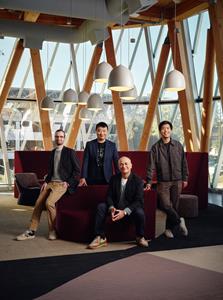
Genyro, a biotechnology company advancing next-generation DNA construction was co-founded by: (From Left to Right) Noah Robinson, Professor Kaihang Wang (Chief Scientific Advisor), Dr. Adrian Woolfson (President, and CEO), and Professor Brian Hie. Photo by Marcus Ubungen.
Legal Disclaimer:
EIN Presswire provides this news content "as is" without warranty of any kind. We do not accept any responsibility or liability for the accuracy, content, images, videos, licenses, completeness, legality, or reliability of the information contained in this article. If you have any complaints or copyright issues related to this article, kindly contact the author above.
